Define and evaluate
Develop the architecture, interfaces and executable control logic for a bounded use case.
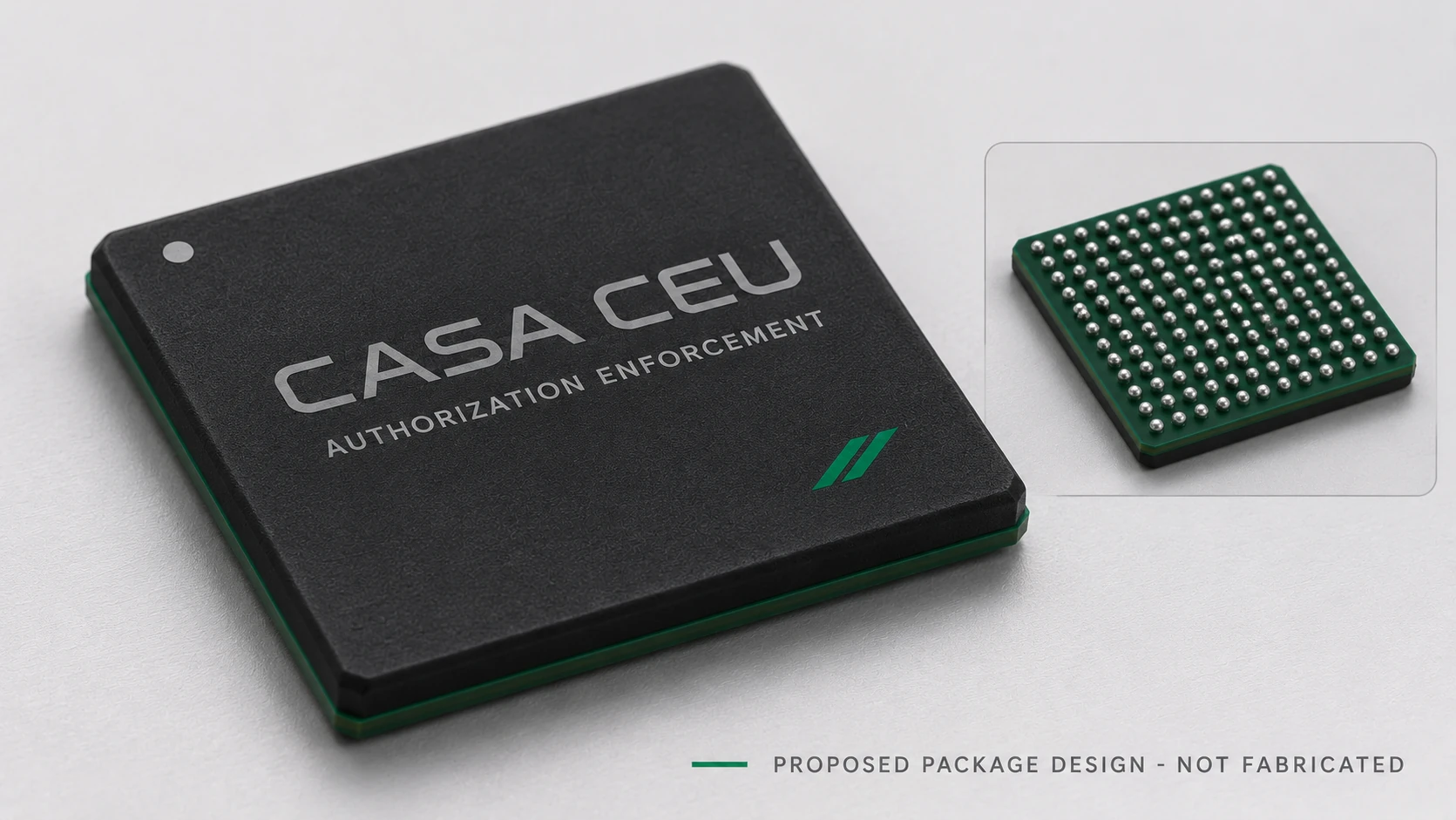
The Constitutional Enforcement Unit programme explores how hardware could enforce valid permission before a specifically protected digital action.
DEVELOPMENT CANDIDATE · NOT A FABRICATED PRODUCTPGI is developing a CEU control-island reference and evaluating the path toward specialist semiconductor implementation.
The research separates coordination and token issuance from enforcement at the protected endpoint. A companion chip cannot protect arbitrary instructions or devices simply by being attached.
Develop the architecture, interfaces and executable control logic for a bounded use case.
Integrate protected verification, state, boot, time and a real endpoint, then obtain independent review.
Select a qualified process and implementation flow. Physical signoff and fabricated-device evidence precede product claims.